
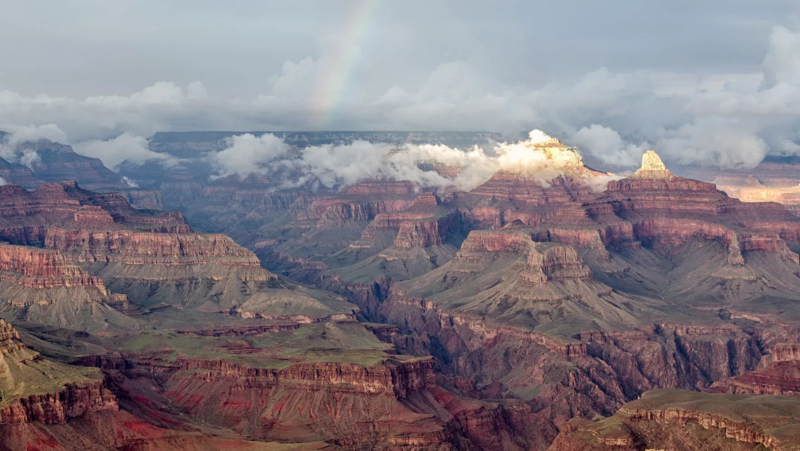
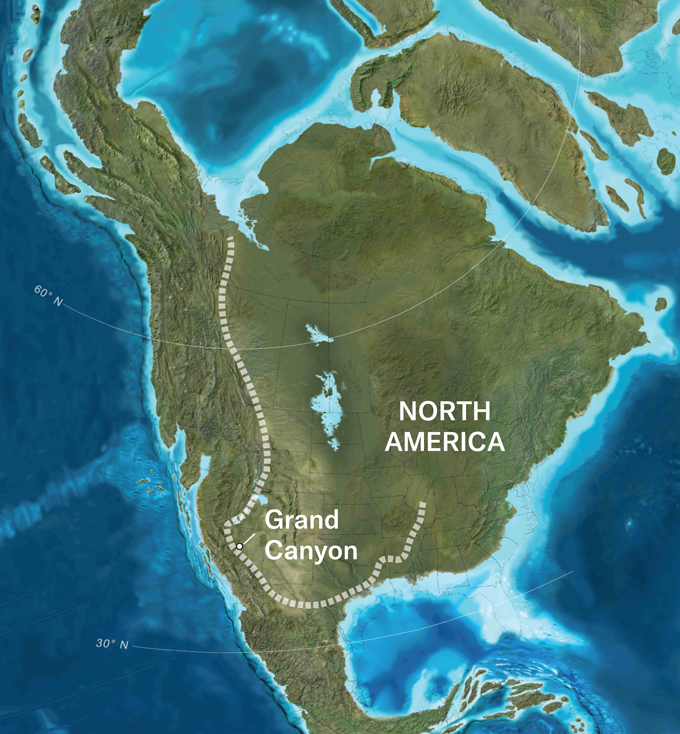
The Grand Canyon’s rock layers hold the key to Earth history of climate and composition; it dates back 2 billion years. However, there is a period of time where the record of layers within the Canyon is missing, as if something wiped it out. Scientists now believe that a glacier along with a massive cliff could have caused the rock layers to be erased. A cliff formed 800 million years ago with the separation of a supercontinent (Van Wyk Joel, 2026). This cliff is called a continent-scale rift-ank escarpment (Gernon, 2026). Over time, weather processes eroded nearnly 1 billion years of Earth’s geologic history from the massive cliff. The cliff spanned most of North America, scientists have never previously thought there was a cliff hundreds of millions of years ago. Now they believe there was one and a billion years of history were erased from it. During the period of Snowball Earth, glaciation and ice also chipped away at exposed layers of rock. Dr. Gernon, a professor of Earth Science at the UK’s University of Southampton and other scientists are still working to pinpoint when the erosion occurred. However, scientists now know that a billion years of history are lost to the elements.
According to Dr. Gernon, “The Grand Canyon encompasses two billion years of Earth history, but more than half this record is absent across a regionally extensive erosional surface known as the Great Un-conformity.” Scientists focused on the missing records from the newly discovered Great Escarpment of Lauren-tia. To uncover the escarpment, Dr. Gernon and other scientists used landscape evolution models to expose the rock formations vulnerable to erosion. Gernon and scientists discovered that, “that rocks within several hundred kilometers of this feature endured substantial erosion, reaching 8 km near the escarpment and decreasing to ≤2 km at lateral distances of ∼200 km from its peak.” Their models helped explain the variable magnitude of erosion associated with the Great Unconformity in the southwestern United States (Gernon, 2026).
Although this time period’s history was lost, scientists are continuing to investigate the geologic processes that shaped the Grand Canyon. By researching erosion and the lesser-known effects of ancient glaciers, researchers are gaining a better understanding of how nearly a billion years of Earth’s history vanished from record. With every discovery, scientists are getting closer to the uncovering how these processes shaped the Grand Canyon’s landscape and missing rock layers.
Credits: