
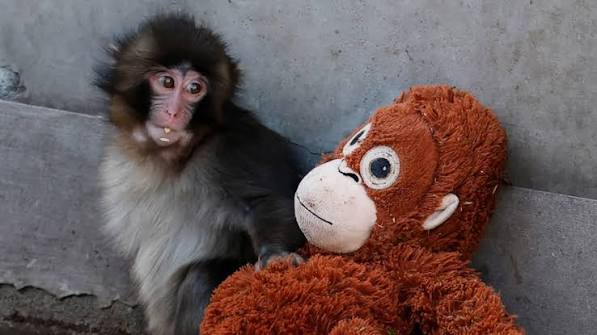
There are nearly 330 to 350 monkey species. All monkeys have tails, but Barbary macaques have short stubs for tails. Many species of Neotropical monkeys, like spider monkeys, can use their strong tails as an extra limb, and they use them to grasp branches. The western Amazon Basin is home to two species of tiny monkeys: the Western Pygmy Marmoset and the Eastern Pygmy Marmoset. Due to their tiny size, they are sometimes called “finger monkeys” and are marketed as pets. But these monkeys do not make good pets; they are wild animals. Male Mandrills are the largest type of monkey, and they can weigh over 65 pounds. They live in the rainforests of central West Africa. The female Mandrills are much smaller; they weigh less than 25 pounds.
Aptly, Howler monkeys get their name from their howl. Their howl can travel 3 miles through the dense jungle. When feeding, some monkey species can fill their cheek pouches with food. This can help them gather food quickly, which they can eat later when it is safe. Snow monkeys have been observed soaking in warm pools in freezing weather. They regularly feature in nature documentaries for this unusual behavior. Diana monkeys have alarm calls that differ depending on the threat. Alarm calls are used to alert group members to a threat, and Diana monkeys have specific alarm calls for leopards and another for eagles. Like people, monkeys’ eyes face forward, and their stereoscopic vision helps them judge distances.
How monkeys use their feet and hands will vary among species, but they can grasp, grip, and manipulate objects. Monkeys typically walk on all fours, but some walk short distances on two legs when needed. Walking primarily upright is a unique human trait. Owl monkeys are the only nocturnal monkeys. Also called the Night monkeys, they are active after dark. Living in the forests of South America, Owl monkeys have large eyes and are adapted to their nocturnal lifestyle. Monkeys like to use a wide range of facial expressions. Facial expressions are used to convey mood, aggression, playfulness, etc. A monkey's grimace is sometimes described as a smile, but a grimace can be a sign of stress or anger, and a monkey baring its teeth is usually not happy.
Sources:
Information:
Picture: