
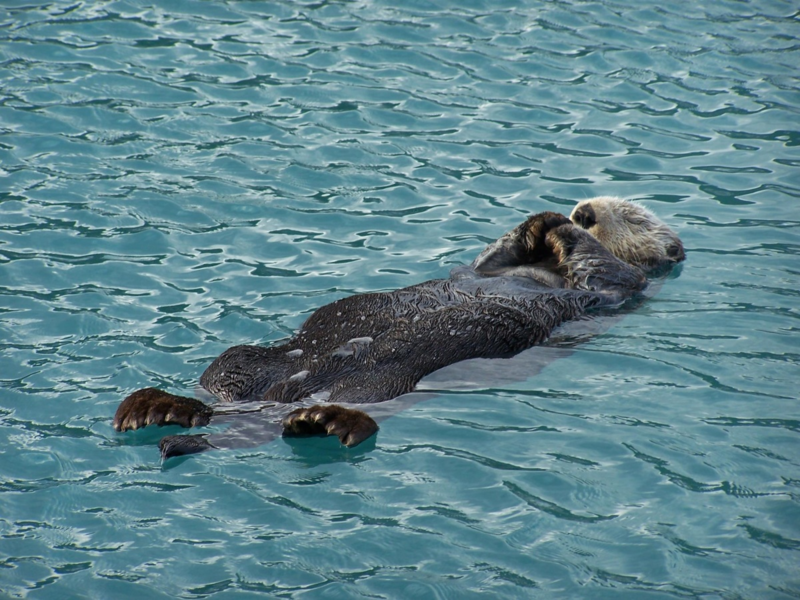
Otters are known as one of the most adorable animals, with their cute faces all the way down to their cute little feet. There are 13 different species of otters around the world. The U.S. is the home to two species: the North American river otter and the sea otter. Otters belong to the Mustelidae family of meat-eating mammals. The sea otter is the biggest type of weasel, but it is also the smallest ocean-living mammal in North America. Coastal Alaska hosts roughly 90% of the world's sea otters, particularly around protected areas like Glacier Bay National Park, Kenai Fjords National Park, and Kodiak National Wildlife Refuge, while California's southern sea otters inhabit San Nicolas Island and the mainland coast between San Mateo and Santa Barbara counties.
River otters are often mistaken for sea otters. River otters live in freshwater, though they do swim and hunt in seawater. While floating on their backs, sea otters—especially mothers and pups—sometimes link paws to keep from drifting away from one another and their food while they sleep. Baby otters are usually called pups but are also called kits or kittens. Females are called sows and males are called boars. Otters consume 20 to 33 percent of their body weight in food daily and dedicate about five hours each day to hunting for meals. Despite being born in the open sea, baby sea otters cannot swim at all for their first month. Their clean, fluffy fur traps air and keeps them warm, which lets them float easily. Mother otters groom their pups and blow air into the coat to make it buoyant. While the mother dives down to hunt for food, she safely wraps the pup in kelp to anchor it in place.
Picture Source:
Information Sources: