
In my last issue, I wrote about the dangers of fast fashion and the fast fashion industry. If you haven’t read that article, I hear it's great. One thing that I cover extensively is that the cheaper you're getting the clothes from a huge industry like Shein, Zara, or Temu, the cheaper the textiles are going to feel and act. By act, I mean seam tightness, ripping, tearing, or even bursting into flame, since almost all cheap (and a large percentage of expensive) clothing is made with either highly flammable cotton or, more likely, melting polyester. This is an issue if you like having clothes that stay on your body for a little while. I examined why the fast fashion industry is so harmful and explained why I advocate against it. Unfortunately, the second largest retailer as of 2025 was Amazon.com, coming in right under Walmart. Safe to say that a company that lets any “store” sell any item on their website has a lot of mass-produced resales or simply bots from websites like Shein selling the same clothes under countless store names. According to the National Retail Federation, Amazon’s 2024 retail sales in the US alone came to 273.66 billion dollars. With more and more Americans slipping below the poverty line, housing and college prices disproportionately on the rise, and a dozen eggs costing almost 12 dollars at my local store, I find 273.66 billion dollars to be a gross amount for one company to have.
If buying from more sustainable sources that sells clothing that won't fall to shreds in seconds, leak dye, or fray until it’s unraveled, is out of your budget, it's no wonder, and you're not alone. Quality is very scarce, especially when the largest source of retail in the US is mostly selling fast fashion, let alone the fast fashion names like Shein or Zara. In this article, I’ll show you some easy ways to repair good clothing that you already have. It’s a valuable skill that's been taught, used, and passed down for generations. I think it’s time we stop buying from guilty corporations and start keeping items that we love in good condition. Don’t let the constant change of trends change what you like to wear. Also, one thing to add is that I simply recommend methods here; I don’t describe how to do all of them. There are countless videos and articles on each method if you decide to find one.
The first valuable aspect of keeping good clothes in wearable condition is patches. Patches can cover and hold together small and large holes alike, and they work on jeans, shirts, jackets, trousers, or any other denim on your person. Some patches are sold in hobby stores or by retailers like Carhartt or Wrangler, such as the one below. 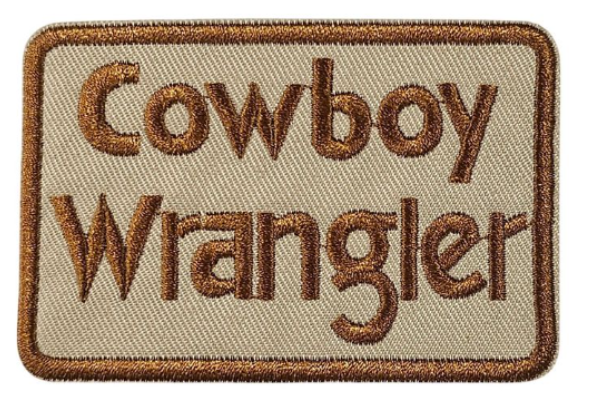 These are common brands that provide patches because they've supported making clothes “work” for a long time. Other patches can be made yourself, and these work just as well and are customizable and fun to paint, stamp, or design with fabric markers. For example, the one below is a linocut print, which uses a rubber (essentially) stamp to press ink into the fabric.
 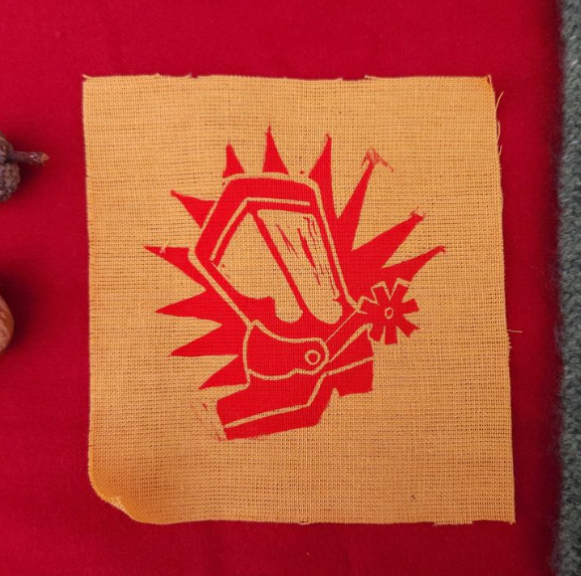 But if stamps or fabric ink/paint aren’t available or are too expensive, almost any simple fabric scrap can be sewn in as a patch. Soft fabrics work well if, like me, you’re tactically defensive about certain materials. Thick fabric patches are often attached at elbows, knees, or other frequent-wear points.
Sewing, to me, is a frightening word. It brought up images of loud machines and housewives showing off complex stitches. But I learned just how valuable a needle and thread can be in this automated and cheap world. I tend to use embroidery floss rather than sewing thread when applying patches, because I like the large pop of color. A blanket stitch (below) is my favorite stitch for adhering patches, because not only do they look cool, but they really hold patches on through washes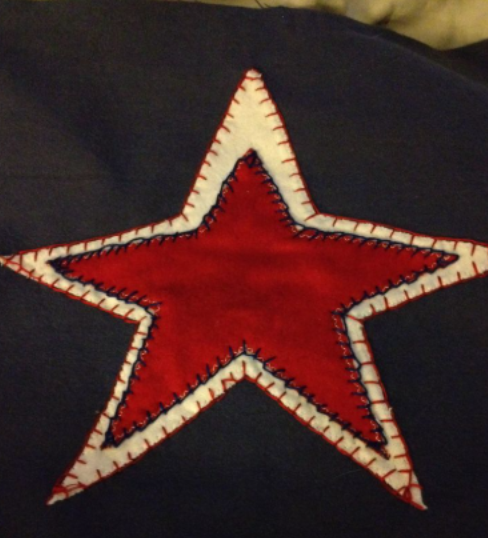 mud, rain, and war. This method is good for attaching patches over holes on clothes, as well as embroidering something pretty over a discolored or fraying area on a beloved clothing, like the colorful embroidery below.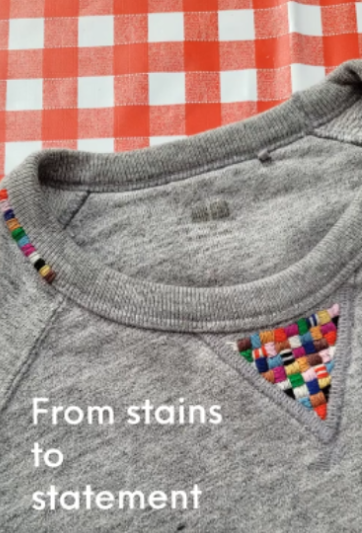
Colorful embroidery is common on pockets, at the hems of jeans, or on sleeves or discolored spots. Sewing also certainly has its uses. Patches can be done with thread, but also with valuable stitches such as the ladder stitch or the invisible stitch. When repairing clothes, sometimes colorful or obvious patches and embroidery aren’t the desired outcome. In this case, I would use an invisible stitch to pull the clothing back together (above)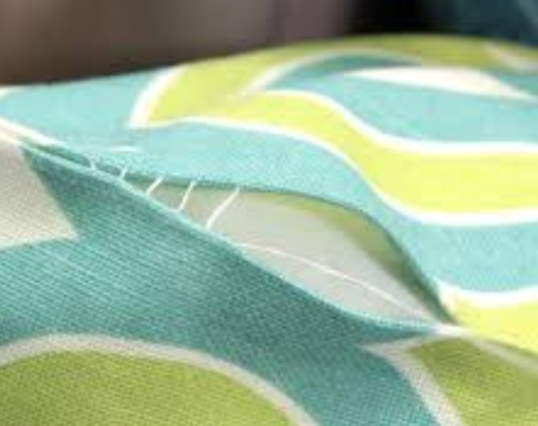 . Invisible stitches are perfect for sleeve rips, softer pants or jeans, or even pillowcases. Invisible stitches and patches work for almost all clothing, but one of my favorite articles of clothing, sweaters, can be very difficult to repair due to the material. I recommend trying your hand at felting if you have a sweater to repair. Find a matching (or non-matching if you want some color) spool of wool roving, and a needle. Even better, a needle pen is perfect for large spaces and thorough application (right).
 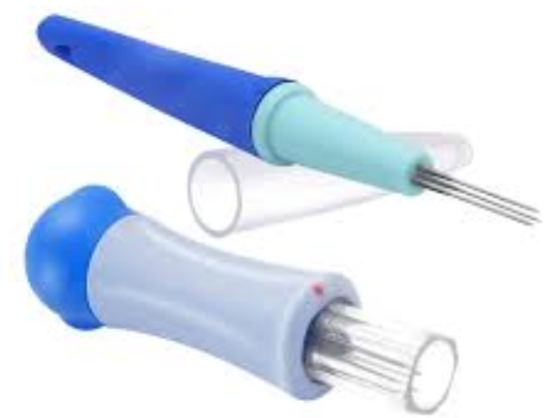 Needle felting can repair sweaters easily using soft materials that can blend in or pop. It can also be used on non-sweaters.
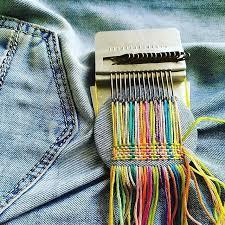
The most common methods that I use for repair are simply colorful fabrics as patches, painted designs on denim patches (with blanket stitches) or colorful embroidery designs (especially on jean pockets). Additionally, a recently popularized but old tool is the loom tool, darning tool, or patch weaving machine. This tool (below) 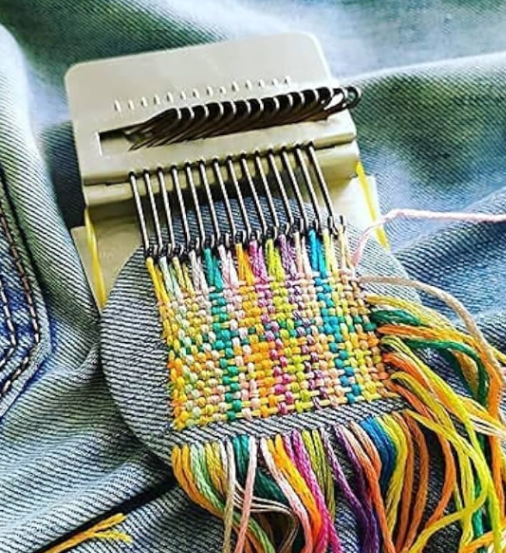 makes square patches of embroidery thread in numerous designs. It can cover large or small holes, frays, or discoloration. There are other fixes, like sewing on buttons, that are relatively quick and simple (and definitely cheap) that many people just skip in favour of tossing out the old and buying new. I learned how to sew buttons recently. I felt proud of myself. I have a new skill. My shirt has a new button. We’re all happy. I guess my point is that there's too much waste in our current world. There's also too much child labour. Keep your clothes, repair, decorate, rewear, and re-love.
In my next article, I cover shoe repairs, sock mending, and basic materials/tools for clothing repair (plus their costs).