
Our world is rapidly changing, moving in unpredictable ways. Along with daily societal
change and discoveries, we uncover more anomalies within our universe. Evolution in
science through studies tells us more about our dynamic world. Scientists have made
groundbreaking progress in aiding endangered and vulnerable animal species.
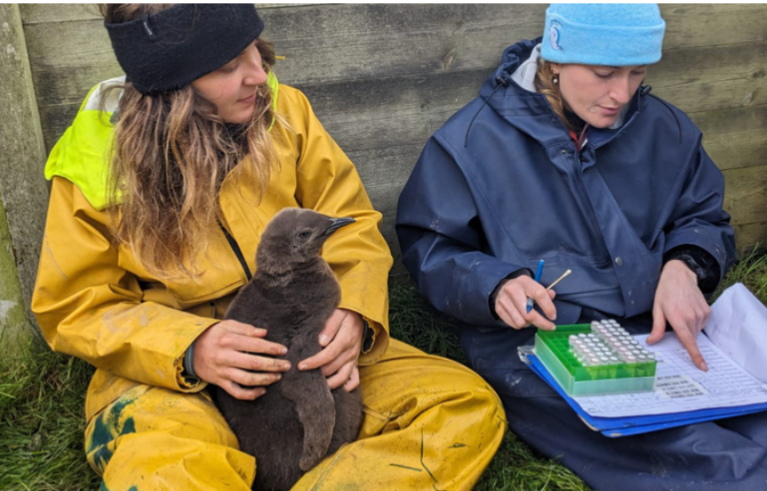
An outbreak of the Avian flu, a viral infection that affects birds, cows, other animals, and even humans, caused mass deaths of southern elephant seal pups in 2024. The alarming number of deaths called for action from disease ecologists to vaccinate vulnerable bird species like king penguins. “In February 2024, a team vaccinated 30 king penguin chicks and followed up with a booster dose a month later. The results are promising: The immunized penguins mounted an immune response without any dangerous side effects”(Garcia de Jesús). The outbreak of deadly diseases like the avian flu is caused by shrinking habitats and more frequent animal interactions, allowing for the spread of pathogens. Tonie Rocke, a wildlife biologist with the United States Geological Survey’s National Wildlife Health Center in Madison, Wisconsin, states, “Their environment has changed, as has ours, and there are diseases moving all over the world at a pace that wouldn’t have happened in the past.” While these vaccines do not guarantee success, they are proving to provide remarkable protection against fatal infectious diseases.
Breakthroughs in Disease: The Correlation (or lack of) between Alzheimer's and Cancer
Diseases are perceived negatively by society, and rightfully so. However, in some cases, certain diseases can protect individuals from getting other diseases. The most well-known example of this phenomenon is sickle cell disease, which provides significant protection against life-threatening malaria. Scientists may have discovered a new example of this situation: cancer’s protection against Alzheimer's.
Doctors first started wondering about the relationship between these two diseases when they saw an interesting pattern. Patients who have cancer or Alzheimer's could only have one of these diseases, not both. One senior pathologist stated, “If you see someone with Alzheimer’s disease, they’ve never had cancer.” Although the correlation looked clear, there were still holes in these arguments due to external factors such as people dying of cancer before they are old enough to develop symptoms of Alzheimer’s disease, and some cancer treatments causing cognitive difficulties, which could obscure an Alzheimer’s diagnosis.
To combat these factors, scientists started studying the correlation in rat models until they finally had a breakthrough. The scientists figured out that a protein called cystatin C, which is secreted by cancer cells, activates a signaling protein in the brain called TREM2. This signaling protein patrols the brain to degrade plaques that are characteristic of Alzheimer's disease, making the model to become much less likely to show symptoms of Alzheimer's. Cystatin C shines as a light of new hope for treatment for Alzheimer's disease. However, the process hasn’t been easy. Springer Nature states the struggles scientists are having with activating the protein: “Researchers have been trying to find drugs that can activate the protein[cystatin C], which could be used as a potential therapy for Alzheimer’s disease, but have struggled: most drugs disable proteins rather than activate them.” So far, the results of the trials have been mixed, but that doesn’t mean it’s a dead end. One scientist states that there is not going to be one cure-all for Alzheimer’s: “It’s going to take a cocktail of drugs to treat Alzheimer’s disease.” Scientists are staying hopeful for the future of this research. Personally, I couldn’t agree more. Like the old saying, “Rome wasn’t built in a day,” this research may take years or decades to come into fruition, but once it does, millions of people will be able to live longer and healthier lives.
Sources:
-https://www.sciencenews.org/article/vaccines-conservation-wildlife-disease
-Image Source: https://www.sciencenews.org/article/vaccines-conservation-wildlife-disease