
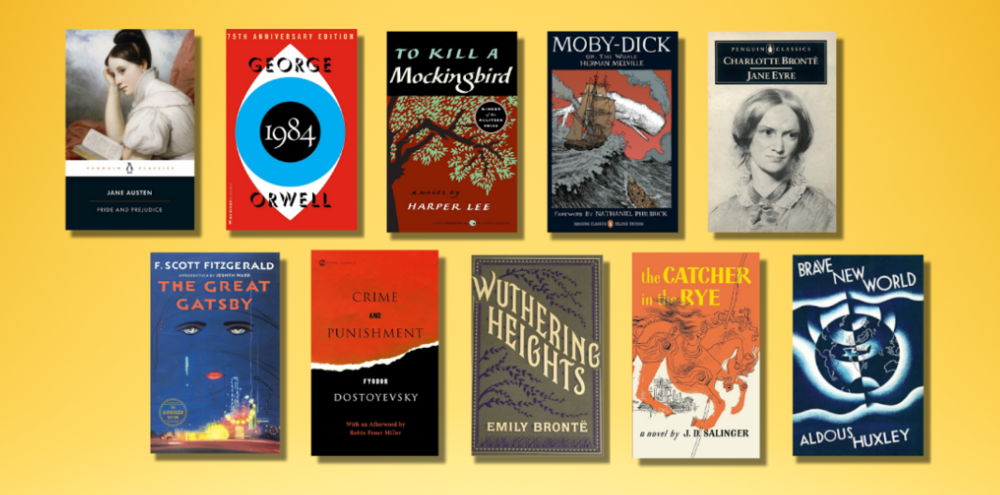
Want to get into classics but don’t know where to start? The following is a collection of notorious books, long and short, that will make reading feel less like a chore. These novels will not only help you keep your New Year’s resolution to read more, but will also make you grossly overeducated.
Short Classics ( >200 pages )
For starters, here are some short classics to read during brief breaks or in your few minutes of free time before bed. These books are perfect for busy bodies or anyone who can’t stand a long-winded novel. Feel free to pick up multiple at a time and breeze through the whole list. While the books themselves are short, their messages are not. The universal morals will linger in your mind long after you finish the stories.
Of Mice and Men by John Steinbeck (1937): this novella explores the harsh reality of the American Dream through the eyes of George and Lenny, two migrant workers during the Great Depression.
Animal Farm by George Orwell (1945): this classic satirizes corruption and equality using farm animals who overthrow their farmer and establish a new government that quickly devolves into a totalitarian state.
The Hound of the Baskervilles by Sir Arthur Conan Doyle (1902): this book pits rational thinking versus supernatural phenomena as Holmes and Watson investigate a supposed ghost hound that terrorizes the Baskervilles family.
The Postman Always Rings Twice by James M. Cain (1934): this controversial classic established the noir genre through its use of fast-paced narration and gripping suspense.
Passing by Nella Larsen (1927): this novella delves into racial identity and heritage through the reunion between Irene and Clare, two women of similar descent living on opposite sides of life.
New Classics ( 21st Century )
Tired of crusty old books that make you feel like you need a translator to understand them? Try the following list of new classics, released after the 2000s that question the past and carry a heavy message for the current generation of readers.
The Kite Runner by Khaled Hosseini (2003): this novel explores the themes of guilt, classism, and redemption through the complex friendship between Amir, who comes from a wealthy family, and Hassan, who is the son of a servant during the fall of the monarchy and the rise of the Taliban.
The Book Thief by Markus Zusak (2005): this story follows a young girl, Liesel, and her life from 1939 to 1945 as she learns to read with her foster father, shares stolen books with neighbors, and navigates the dangers of the regime. The book explores the power of books, human resilience, and the brutality of war.
The Hunger Games by Suzanne Collins (2008): this classic follows teenagers forced to compete in a televised fight-to-the-death competition, with main themes including survival, totalitarianism, and media manipulation.
The Road by Cormac McCarthy (2006): this book examines the line between civilization and savagery, as a father and son travel south toward the coast with only a pistol and their bond to sustain them.
Life of Pi by Yann Martel (2001): this novel delves into themes of faith, survival, and storytelling through Pi Patel, who survives 227 days stranded on a lifeboat out at sea with a tiger.
Classics that Don’t feel like Classics
Want to read classics that don’t make you give up fast-paced and exciting stories? This collection is perfect for you. Below are books that not only explore revolutionary ideas and universal themes but also maintain thrilling and dynamic storytelling.
The Catcher in the Rye by J.D. Salinger (1951): this classic is known for its themes of rebellion and the change from childhood to adulthood as expressed by a cynical teen, who recounts his experiences after being expelled from his school.
The Outsiders by S.E. Hinton (1967): this novel explores the divide between classes and the dangers of social pressure through the conflict between two rival gangs and the violence that ensues.
Dracula by Bram Stoker (1897): this gothic horror story introduced the iconic vampire Count Dracula and revolutionized a new form of storytelling— epistolary format while establishing the modern vampire archetype.
The Picture of Dorian Gray by Oscar Wilde (1890): this classic examines the heavy consequences of moral decay through a philosophical tale of a young man who sells his soul for immortality.
Invisible Man by Ralph Ellison (1952): this novel follows a nameless African American man's search for identity in a racist America, exploring themes of race, individuality, and social and political disillusionment through surreal and satirical events.
Image Source: https://www.robertrjoneslibrary.org/post/10-must-read-classics-you-ve-been-meaning-to-get-to